How tigers look to deer:-
How tigers look to deer:-Introduction
There are many amazing predator-prey relationships in the natural world. One of the most interesting is that of tigers and deer. Tigers are powerful predators and deer are common prey for them. So, when a tiger sees a deer they know they have a potential meal. However, when the deer sees the tiger They See a dangerous threat!
Have you ever wondered how Tigers Appear to deer? Do They See them as large, scary creatures? Or do they just see them as movements around them? The answer to this is complex as it involves how different animals see, colors, body language, movement, smells, hearing and survival instincts.
Learning how Tigers Appear to deer is a fascinating insight into the animal kingdom. It shows why deer are very aware and can quickly recognize any unusual movements. It also shows how tigers have adapted to hunt deer effectively.
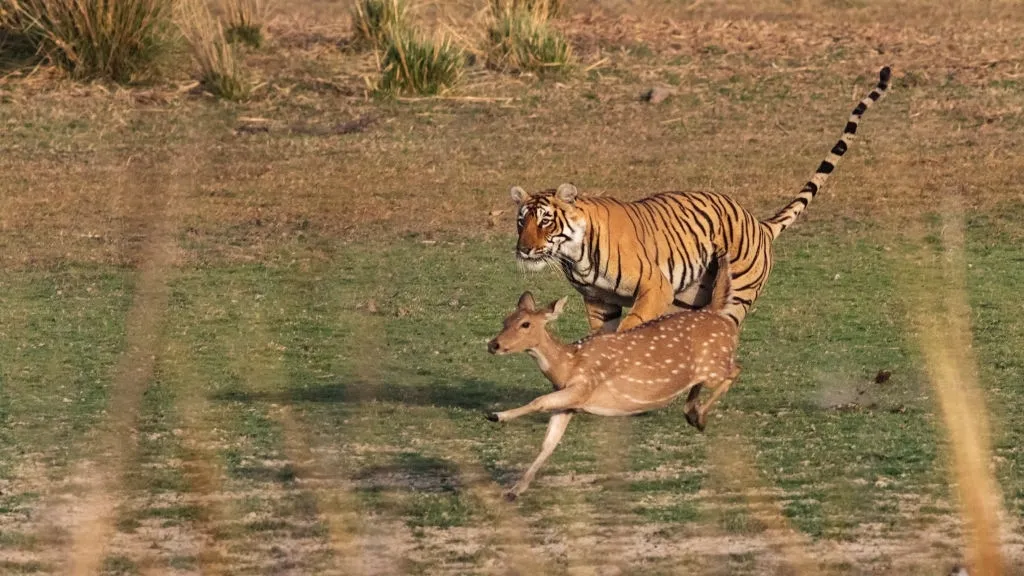
Tigers Appear as Dangerous Predators
How tigers look to deer:-Deer see tigers as one of the most dangerous threats they could encounter. Tigers are large, muscular animals with strong legs, sharp claws, strong jaws and impressive teeth. They have a body built for hunting and almost every feature of their body helps them to be top of the food chain.
When a tiger is spotted by a deer they won’t necessarily admire it for its beautiful orange fur and unique black stripes. Instead, their brain will automatically recognize the tiger as a potential threat.
Their large body, forward facing eyes, muscular shoulders and careful movements can all make them seem dangerous. Deer are naturally cautious animals and have adapted to recognize potential predators.
Even if the tiger isn’t hunting they can make nearby deer feel on edge. The deer may pause eating, look up and tilt their ears towards the tiger.
Overall, recognizing a threat is far more important to deer.
Can Deer See The Orange Colored Fur Of Tigers?
How tigers look to deer:-One of the most interesting aspects of how Tigers Appear to deer is the color of their fur.
We see tigers as vibrant orange with bold black stripes. However, deer don’t see things the same way we do.
Most deer are dichromatic meaning they only have two main color cones in their eyes. Humans typically have three. This means colors will look different to them.
Deer have very sensitive blue and green wavelengths however they struggle to see red and orange.
This can mean that the orange fur of tigers aren’t as vibrant to deer as we see them. Depending on the light and the surrounding plants, it can look more like yellow, brown or grey.
This means that the orange fur of tigers won’t necessarily stand out to deer in a forest.
Instead, they may blend in very well with dry grass, leaves, dirt and patches of sunlight.
Black Stripes Help Tigers Blend In
How tigers look to deer:-One of the most recognizable parts of a tiger is their black stripes. Each tiger has a unique pattern of stripes, like how humans have unique fingerprints.
These stripes help them to blend in.
Forests are full of complex lighting. Light will shine through the tree branches creating patches of light and shade.
The stripes on a tiger can help to disguise their shape.
To deer, if the tiger is hiding in tall grass or thick plants, they may not immediately realize it’s there. They may just see a patch of darkness, a little movement or an unusual shape.
If the tiger is still, then they will blend in very well.
This is important as deer often rely on movement to identify potential threats. If the tiger is still it can be hard to tell it’s there but if there is any slight movement it will grab their attention.
The combination of the orange fur, black stripes and natural shading means tigers have an advantage when hunting.
Deer Have a Wide Field Of Vision
How tigers look to deer:-Another important aspect is how deer have their eyes.
Unlike tigers and humans, deer have eyes on the sides of their head meaning they have a very wide field of vision.
They can have a large view of their surroundings without moving their head.
This is extremely helpful for animals that need to be aware of predators. A tiger may sneak up from the side or back but the deer have a better chance of seeing any movement around them.
However, deer generally won’t have as much stereoscopic vision as predators with forward facing eyes. This can mean they struggle to tell how far away something is.
If the tiger is sneaking up on them they may just see some movement.
Once they realize what it is they can quickly run away.
Tigers Appear Scary When Moving
How tigers look to deer:-Although a tiger may not immediately grab the attention of a deer if they are just standing still in the forest, they can if they start to move.
Tigers are very quiet and can move very carefully. Their paws are padded to help reduce any noise and their flexible bodies can move through plants without causing too much disturbance.
As the tiger starts to move towards the deer they may move slowly.
If the deer notices any slight movement in the bushes, they may become suspicious. They may stop grazing and lift their head to look around carefully.
If they realize it is a tiger they can react very quickly.
The powerful walking, low body and focused behavior can all indicate a threat.
Movement is often more important to deer than colors. If the tiger is completely still they may struggle to see them but if they suddenly move they can become an obvious threat.
This is why tigers rely on stealth and patience when hunting.
Tiger Eyes May Indicate a Threat
How tigers look to deer:-Tigers have forward facing eyes to help them judge distance and focus on their prey. Their eyes are very useful when hunting especially in low light.
Although deer won’t necessarily understand the facial expressions of a tiger like we do they can recognize their behavior.
If they are looking straight at the deer they may be about to move in on them.
Their focused stance, low body and careful movements can all indicate what they are doing.
Deer are very aware of changes in their surroundings. If they notice an animal looking very focused on them or starting to move towards them they may become aware.
The eyes of a tiger aren’t necessarily scary but the overall behavior can indicate a threat.
What is most important to deer is whether or not the tiger is about to hunt them.
Smell And Hearing are also Important
How tigers look to deer:-It is important to remember that deer don’t just rely on their eyes.
They have a great sense of smell and hearing.
They can pick up on any unfamiliar smells in their surroundings. If a tiger has been through an area recently, they may notice the smell.
This can help them realize there may be a dangerous animal nearby.
Deer also have large, mobile ears to help them hear sounds from all around them.
Any small snapping of a twig, rustling of leaves or unusual footfalls can make them aware.
Sometimes they may become aware of a tiger before seeing them.
This means tigers and deer have a multi-sensory relationship. The deer don’t need to see a clear image of a tiger to realize there may be a threat nearby.
Why Tigers Are Hard to Spot
How tigers look to deer:-Tigers are amazing ambush predators. They often rely on hiding, sneaking up and attacking when they are close.
This plays on many of the weaknesses of deer.
They have camouflaged fur.
They have padded paws to help them move quietly.
They have muscular bodies to keep low and move carefully through the forest.
They are also very patient hunters.
This can make them a big threat to deer.
The biggest threat can be that they are hard to spot.
They don’t need to look scared from a distance to be a threat. In fact, their ability to stay unnoticed is one of their greatest advantages when hunting.
How Deer Behave When They See a Tiger
How tigers look to deer:-When deer realize they are looking at a tiger they may behave very differently.
They may freeze.
This can help them gain information and stay unnoticed.
They may:
Look up and stare
Tilt their ears
Pause eating/walking
Sniff the air for any unfamiliar smells
Carefully move away if the tiger isn’t moving towards them
Run quickly if they think they are about to be attacked.
Deer also behave to indicate there is a threat.
If one deer spots a predator others nearby may become aware.
This can make it harder for tigers to sneak up on a whole group.
However, despite having great senses they may not always escape a skilled tiger.
How tigers look to deer:-Conclusion
How tigers look to deer:-So how do Tigers Appear to deer? They are much more fascinating than just a large dangerous animal.
To deer tigers are a potential predator. They may not have as colorful appearance and can be harder to recognize. The orange fur may not stand out as much and their black stripes can help disguise their shape amongst the plants and shadows of the forest.
However, they don’t just rely on their vision. They have great hearing, a strong sense of smell, wide field of vision and are great at picking up on movement. This can help them recognize threats.
Although tigers may look beautiful and majestic to us they represent a serious survival challenge to deer.
This relationship shows how different animals see the same environment. What may look bright and obvious for one species can be hard to recognize for another.
Overall, the camouflaging and hunting skills of tigers are matched with the awareness and escaping instincts of deer. Their relationship is an amazing example of evolution, adaptation and the careful balance of life in the wild.